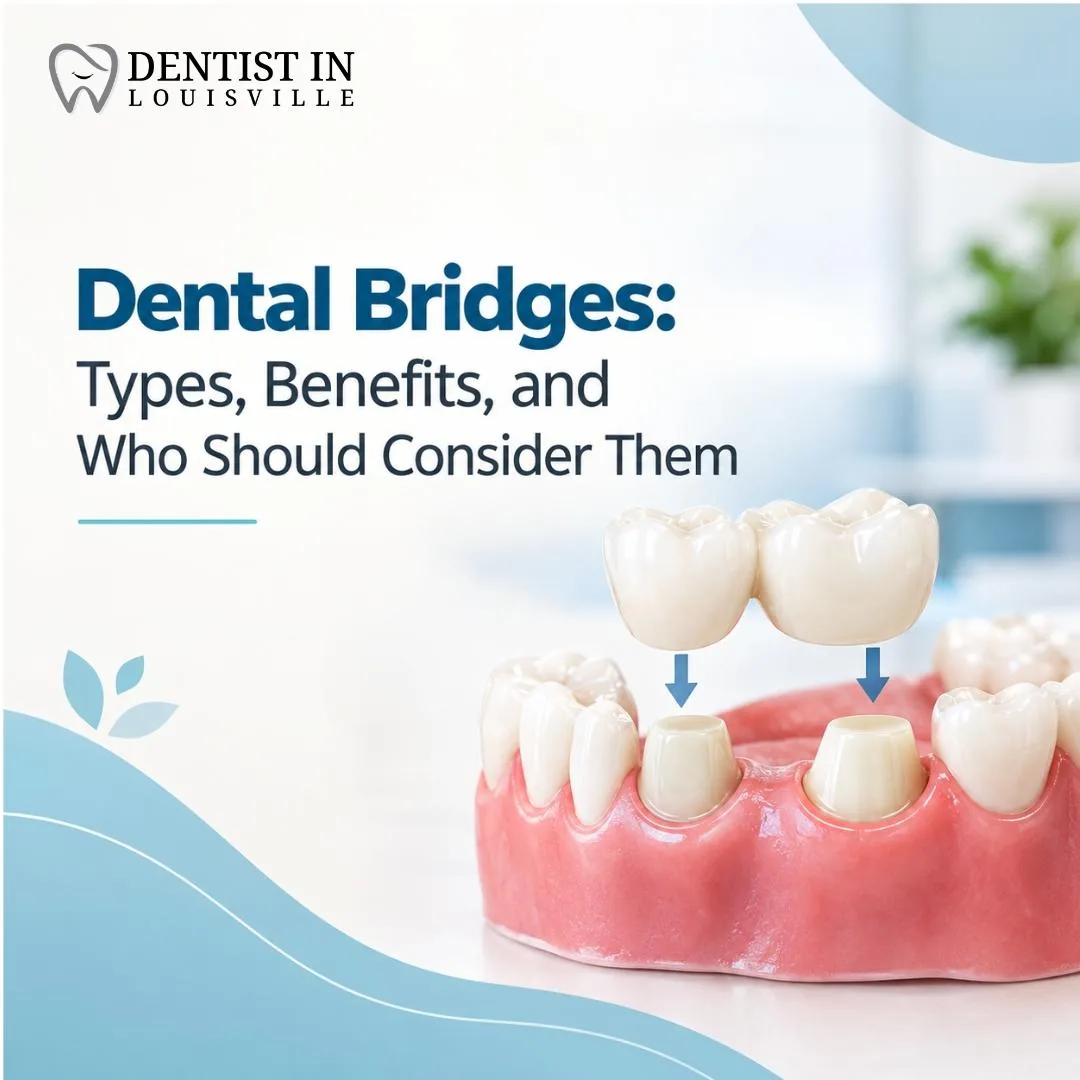
Many people lose a tooth from injury, decay, or age. Missing teeth can make chewing hard and change how a face looks. Dental Bridges can fix these problems and help with tooth replacement, chewing function, and aesthetics.
Dental Bridges keep teeth from moving and support oral health and gum health. The guide will explain bridge types, dental procedures, and how bridges compare to dental implants and implant-supported options.
Dental bridges come in several types, each serving a specific need for tooth replacement. The most common are traditional bridges, which often consist of two crowns anchored on natural teeth surrounding the gap. Cantilever bridges work well when there is only one adjacent tooth to support the bridge. A Maryland bridge uses metal or porcelain wings that attach to nearby teeth instead of crowns.
Implant-supported bridges stand out as strong and durable alternatives. They connect directly to dental implants without requiring alterations to natural teeth. This type maintains better gum health and bone density compared to other options, making it an excellent choice for many patients with missing teeth.
After exploring the types of dental bridges, it’s essential to understand their benefits. These restorations fill gaps left by missing teeth and restore chewing function. Patients with dental bridges enjoy improved aesthetics and enhanced oral health. A well-fitted bridge maintains mouth structure and prevents remaining teeth from shifting.
Dental bridges also help prevent bone loss in the jaw. They offer a stable and secure fit, making eating and speaking much easier for those with missing teeth. Implant-supported bridges serve as strong alternatives that usually do not require cutting down natural teeth or placing crowns on them.
While dental bridges are effective, they can be more prone to infections compared to dental implants or fillings due to their intricate design.
People with missing teeth should consider a dental bridge. These bridges restore chewing function and enhance oral health. They help maintain mouth structure and prevent remaining teeth from shifting. Additionally, dental bridges offer both functional and aesthetic correction for those concerned about their appearance.
Individuals suffering from bone loss in the jaw may also benefit from dental bridges. Bridges provide a stable and secure fit that makes eating and speaking easier. Those who prefer an option that does not require cutting down natural teeth might find implant-supported bridges appealing. Overall, anyone looking to improve their smile can explore dental restoration as an option for tooth replacement.
Dental bridges are tooth replacement devices. They provide dental restoration for missing teeth. Many are fixed restorations that join nearby teeth. Dentists in prosthodontics fit them. Some are temporary bridges while you wait for the final one.
People with one or more missing teeth should ask about bridges. Bridges restore chewing function and improve aesthetics. They can help with bite correction and tooth alignment. People who need quick tooth replacement and routine dental care often choose them. Talk to a dentist about your face shape and needs.
Traditional bridges use fixed restorations and cover nearby teeth. One-sided bridges attach to only one neighbor tooth. Bonded bridges use a metal or porcelain framework that bonds to teeth. Implant based bridges use dental implants for support. Some people wear temporary bridges during recovery.
They restore chewing function and help speech. They improve aesthetics and fill gaps from missing teeth. Bridges support tooth alignment and aid bite correction. With good care, they offer strong durability. They can also protect oral health by stopping nearby teeth from shifting.
Dental procedures include tooth preparation, fitting, and placing temporary bridges. Some steps need local anesthesia and follow up visits. Risks include tooth damage, gum health problems, and issues with periodontal health. Poor dental care raises these risks. Implants need surgery and a longer healing time.
Dental implants replace the tooth root and can be more durable. Bridges are a faster dental restoration and need less surgery. Cosmetic dentistry goals, bone health, and your face shape affect the choice. A prosthodontist will review options and your oral health. They will match the choice to your chewing function and dental care plan.
Ready to talk to a dentist in Louisville, KY? Learn more about dental bridges in Louisville, missing teeth replacement options and dental implants, or get in touch below.
Tell us a little about what you need — we'll be in touch shortly.
6826 Bardstown Road, Louisville, Kentucky, 40291, USA
Hi! I'm Tooth fairy! Your AI Assistant Ask me anything