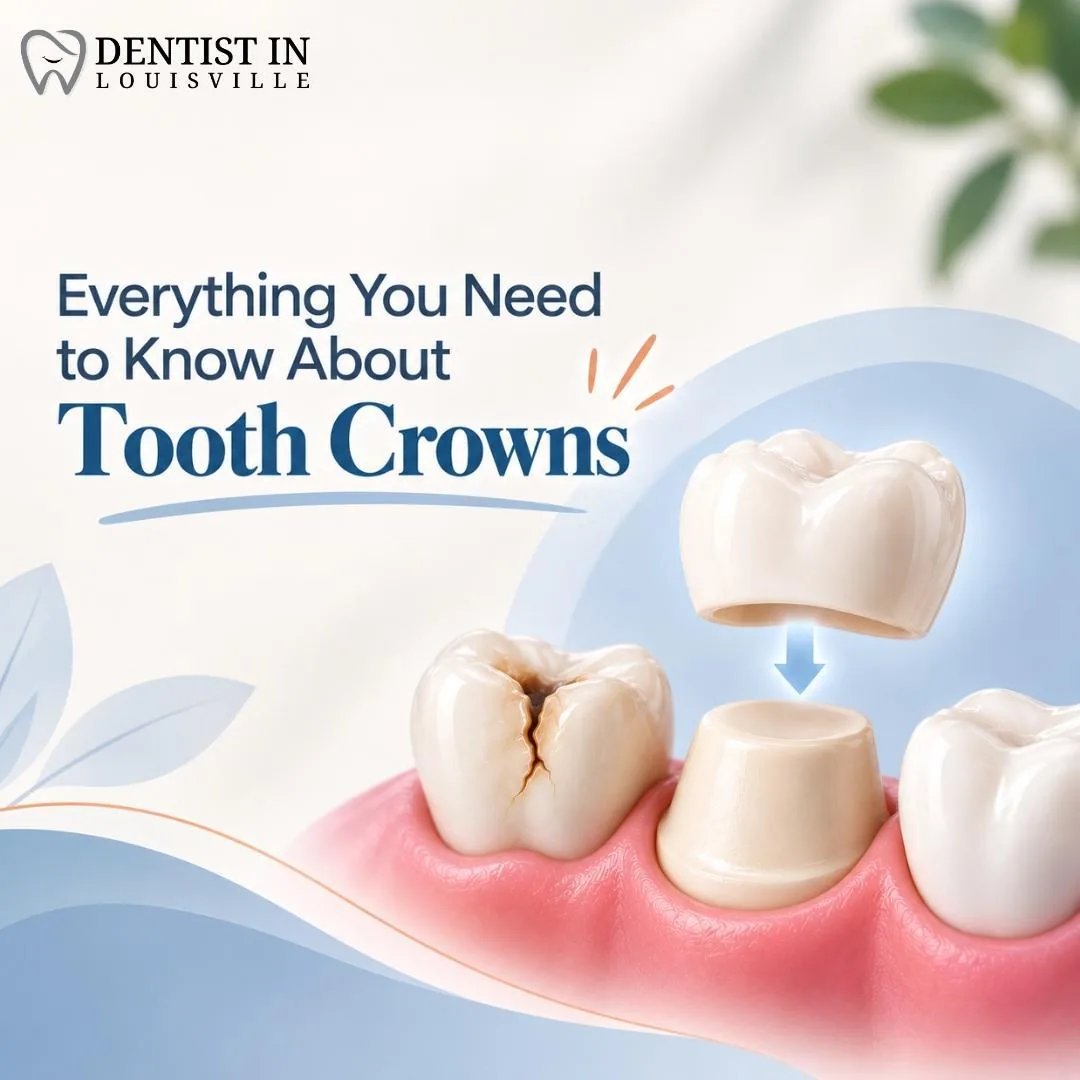
Many people feel pain or see a cracked tooth and want a clear fix. Patients may worry about tooth decay, tooth repair, or how a tooth cap will look. A Dental Crown can restore a tooth and ease pain.
A Dental Crown is a cap-shaped dental restoration that fits over an entire tooth. It restores shape, size, and strength and helps with both function and aesthetics. This guide explains crown materials, the dental procedure, and aftercare.
Many people need tooth crowns to restore their damaged teeth. Crowns come in different materials, each offering unique advantages for various dental needs.
A dental crown serves as a cap-shaped restoration that covers an entire tooth. Individuals might need a crown to address decayed, broken, or worn-down teeth. These crowns protect and restore the shape, size, and strength of compromised teeth.
After root canal therapy, dentists often recommend crowns to shield treated teeth from fractures. Different materials can make dental crowns. Common options include ceramic, zirconia, porcelain-fused-to-metal, and full metal. Each material offers unique benefits while maintaining strong functionality.
Dental crowns typically last between 5 to 15 years; good oral hygiene practices can extend their lifespan further. Regular dental check-ups also play a critical role in maintaining oral health and the longevity of these restorations.
Dental crowns can come in several materials. Common options include ceramic, zirconia, porcelain-fused-to-metal, and full metal. Ceramic crowns offer an attractive look. They blend well with natural teeth and work great for front teeth restorations. Zirconia crowns are strong and durable; they resist wear better than other materials.
Porcelain-fused-to-metal crowns combine strength with aesthetics. They have a metal base for durability and a porcelain layer that mimics the appearance of natural teeth. Full metal crowns provide strength as well but may lack aesthetic appeal compared to other options. Each type has its benefits and potential drawbacks based on individual needs for tooth restoration or cosmetic dentistry choices.
Tooth crowns provide several benefits. They restore the appearance and function of damaged teeth. These dental restorations can protect weak or decayed teeth from further damage. Crowns also maintain the shape, size, and strength of a tooth. Patients can enjoy improved oral health and aesthetics after receiving a crown.
Despite their advantages, some potential drawbacks exist. Crowns may require replacement every 5 to 15 years, with an average lifespan of about 10 years. Material choice affects longevity; porcelain might chip while metal could feel less natural for some patients.
Good oral hygiene remains crucial to extending their life span and avoiding issues like tooth decay beneath the crown. Understanding these factors is essential before undergoing the dental procedure for crowns. The process to receive a crown involves multiple steps that ensure proper fit and comfort.
The tooth crown procedure involves several steps to ensure a proper fit and function. After the dentist places the crown, patients need to follow specific aftercare instructions for optimal healing and longevity.
A dental crown procedure begins with a visit to the dentist. The dentist examines the tooth and takes X-rays to assess its condition. If necessary, they may perform a root canal to treat any infection or significant decay. Afterward, the dentist shapes the tooth to make room for the crown. This process involves removing some enamel from all sides of the tooth.
The dentist makes impressions of the prepared tooth and surrounding teeth. These impressions help create a custom-made dental crown that fits perfectly. Patients typically receive a temporary crown while waiting for their permanent one.
Once ready, usually within two weeks, patients return for final placement. The dentist removes the temporary crown and bonds the new one into place with strong adhesive materials. Crowns secured properly restore both appearance and function effectively.
Dental professionals usually take several steps during the crown procedure. They first prepare the tooth by removing any decay and shaping its structure. Afterward, they create a custom-made crown that fits securely over the entire visible part of the tooth. Patients can expect temporary crowns while their final crown is being made. These temporary caps protect and maintain function until the permanent one is ready.
After treatment, individuals may experience some sensitivity in the crown area. This discomfort generally fades after a few days. Crowns typically last between five to fifteen years; however, regular maintenance plays a crucial role in their longevity. Good oral hygiene practices are essential for keeping dental crowns in good shape. Routine dental check-ups help extend their lifespan and ensure optimal oral health.
A dental crown typically lasts between 5 to 15 years, with an average lifespan of around 10 years. This longevity depends on the material used and the patient's oral hygiene practices. Good maintenance plays a crucial role in extending the life of crowns. Regular dental check-ups help detect any issues early.
Crowns improve both appearance and function for damaged teeth. They protect teeth that have undergone treatments like root canal therapy from fractures. Worn-down teeth benefit greatly from crowns as they restore strength and shape. Maintaining excellent oral health through consistent care is essential for maximizing the effectiveness of tooth restoration options.
A tooth crown, also called a tooth cap, is a prosthetic. It is one of the dental crowns used for dental restoration and tooth restoration. A crown covers weak or broken tooth structure.
You may need a crown for tooth decay or a cracked tooth. You may need one after endodontics. A crown can also attach to dental implants. Crowns help protect your oral health.
Crown materials vary by need. Some aim for strength, some for aesthetics. Dentists use aesthetic dentistry and cosmetic dentistry ideas. They order a custommade crown for a better fit and look. Prosthodontics guides the choice.
The dental procedure begins with an exam. The dentist shapes the tooth and takes impressions. A lab makes a custommade crown. The dentist fits the crown and checks your bite. This step is common in dental restoration.
Crowns act as a prosthetic cap to protect tooth structure. They help stop further tooth decay when you keep good care. Brush and floss each day. See your dentist for checks so crowns last longer.
Ready to talk to a dentist in Louisville, KY? Learn more about dental crowns in Louisville, root canal treatment and tooth decay treatment, or get in touch below.
Tell us a little about what you need — we'll be in touch shortly.
6826 Bardstown Road, Louisville, Kentucky, 40291, USA

Hi! I'm Tooth fairy! Your AI Assistant Ask me anything