Many people worry when a dentist points out a large filling or a weak tooth. They fear a crown, more drilling, or lost tooth enamel. Pain and chewing trouble add to the stress.
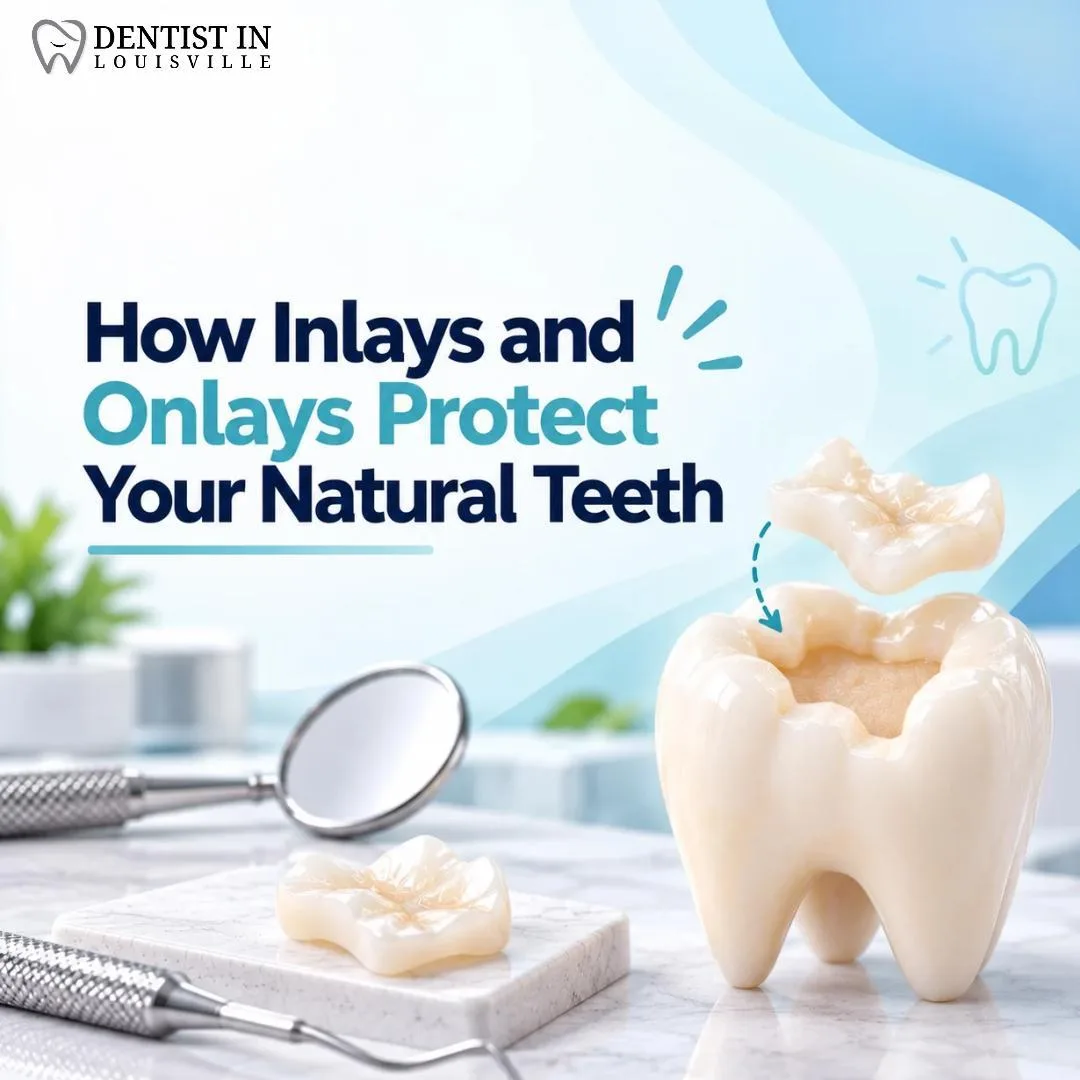
Dentists use inlays and onlays as special types of dental restoration. These treatments help fix damaged teeth while keeping most of the natural tooth structure intact.
Inlays fit inside the chewing surface of a back tooth. They replace lost tooth enamel after decay or old fillings. The restorations often use porcelain, composite, or gold. They count as a dental restoration that preserves more natural tooth structure than a crown. Many inlays last 10 to 30 years with good care.
A restorative dentist who placed over 200 inlays reports smaller cavities heal better with this option. The procedure stays minimally invasive and keeps the tooth stronger than large dental fillings.
Patients with bruxism may still need a night guard to protect the restoration and the natural tooth.
After learning about inlays, it’s important to understand their counterpart: onlays. Onlays serves a similar purpose but covers more of the tooth's surface. These specially crafted restorations fit over the top and sides of damaged teeth.
Dentists create them when a tooth has moderate decay or damage that requires additional support.
Onlays often protect larger areas than standard fillings do. They can replace lost enamel and restore strength to affected teeth while maintaining natural aesthetics. Patients appreciate how seamlessly onlays blend with their existing tooth structure.
Inlays and onlays offer excellent protection for natural teeth. They preserve more tooth structure while providing strength against wear and tear.
Inlays and onlays help keep more of the natural tooth structure intact. This preservation is crucial for overall oral health. Unlike traditional fillings, which can require a larger cavity to be drilled, inlays and onlays need less removal of healthy enamel. Dentists customize them to fit perfectly within the tooth's contours.
This minimally invasive approach means teeth remain stronger for longer. Less drilling preserves the integrity of the tooth. Patients benefit from enhanced durability and strength while reducing future dental issues, like decay or damage.
Keeping as much natural tooth structure as possible supports lasting oral health and contributes greatly to successful dental restoration efforts.
Inlays and onlays play a crucial role in strengthening teeth. They bond directly to the tooth structure, which enhances its overall strength. This added support makes the tooth better equipped to handle daily tasks like chewing.
Many people experience bruxism, where they grind their teeth at night. Inlays and onlays help absorb some of that pressure, protecting against cracks or breaks.
These restorations don’t just cover up damage; they reinforce what’s already there. By using high-quality materials, dentists create a durable layer that feels natural. Patients can eat with confidence again without worrying about further weakening their teeth.
With inlays and onlays, oral health gets a real boost while providing necessary strength for long-lasting use.
Inlays and onlays play a vital role in preventing further decay. They seal the surface of a tooth, blocking bacteria from entering cracks or cavities. This sealing action protects the natural tooth structure.
By covering areas prone to damage, these restorations help maintain oral health over time. Many people struggle with bruxism, which can cause more wear and tear on teeth. Inlays and onlays give those teeth additional strength and support.
Cavities can deepen if left untreated, so early intervention is key. Dental professionals often recommend these options for their durability and effectiveness in stopping decay at its source.
The materials used are sturdy yet blend well with existing enamel; this makes them an excellent choice for aesthetics too. This combination of function and form promotes long-lasting dental restoration while encouraging better gum health overall.
Keeping teeth healthy means reducing the risk of bigger problems down the line, making inlays and onlays a smart preventive approach for everyone.
Inlays and onlays offer strong, long-lasting solutions for dental issues. They blend seamlessly with natural teeth, making smiles brighter and more appealing.
Inlays and onlays offer a strong solution for dental restoration. Made from materials like porcelain or resin, they withstand daily wear and tear. These restorations bond well to natural tooth enamel, enhancing durability.
Unlike traditional fillings, they cover larger areas of the tooth. This design provides extra strength to prevent cracks or breaks.
Patients can expect these treatments to last many years with proper care. Regular brushing and flossing keep them in good shape. Inlays and onlays also stand up well against bruxism, a condition that causes teeth grinding.
This feature makes them an excellent choice for anyone looking to maintain oral health while enjoying durable aesthetics.
Inlays and onlays blend well with natural teeth. They match the color of dental enamel, creating a smooth look. This means no one can tell they are there. Patients appreciate the natural aesthetics that come with these restorations.
These options offer strength without sacrificing appearance. A skilled dentist customizes them to fit each tooth perfectly. By preserving more tooth structure, inlays and onlays also contribute to better oral health long-term. The result is beautiful smiles that last through everyday activities like eating and drinking.
Inlays and onlays are dental restorations that fit inside or over your natural teeth. They help repair damage from cavities or cracks while preserving more of the tooth structure.
These restorations act as a shield for your teeth. They fill in decayed areas, preventing further damage. This means less chance of needing a full crown or extraction later.
Yes, they often offer a stronger solution than traditional fillings. Inlays and onlays bond well to the tooth, providing durability while maintaining its natural look.
With proper care, these restorations can last many years, sometimes even decades! Regular dental check-ups keep them functioning well and looking great too.
Ready to talk to a dentist in Louisville, KY? Learn more about inlay and onlay restorations in Louisville, fillings, tooth decay treatment and weak tooth treatment, or get in touch below.
Tell us a little about what you need — we'll be in touch shortly.
6826 Bardstown Road, Louisville, Kentucky, 40291, USA
Hi! I'm Tooth fairy! Your AI Assistant Ask me anything